Ad Campaign – AZ Tourism

Introduction – Your Story Starts Here

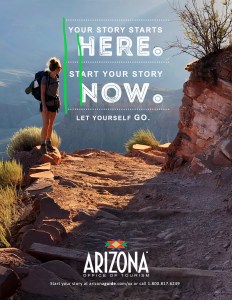
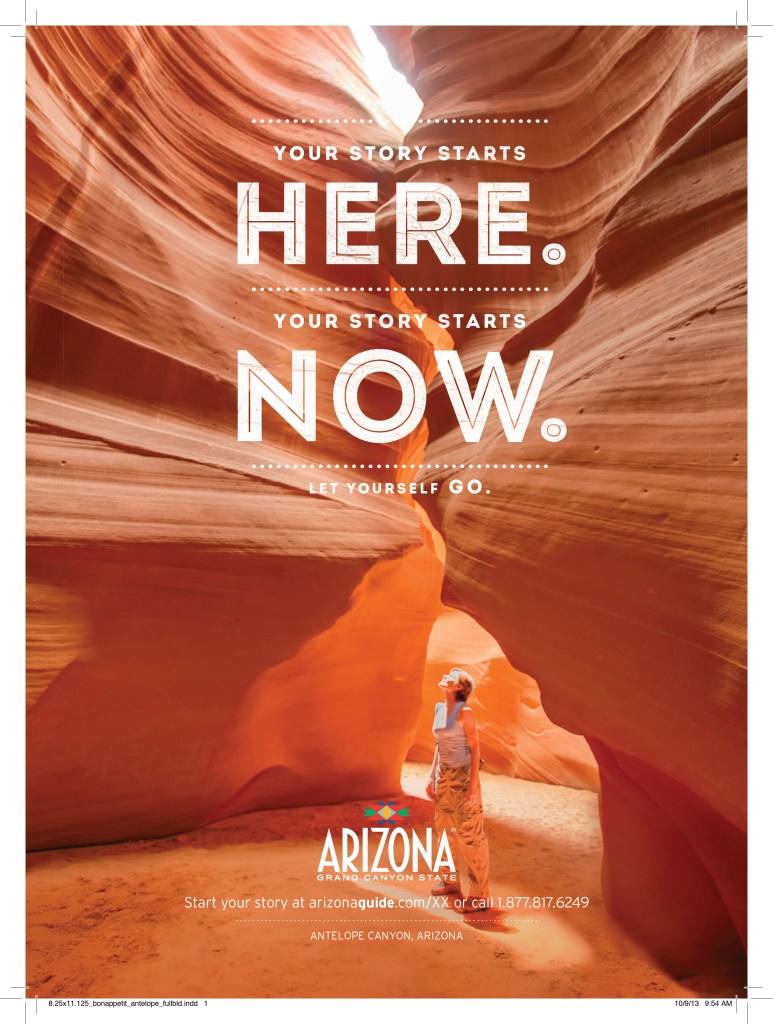
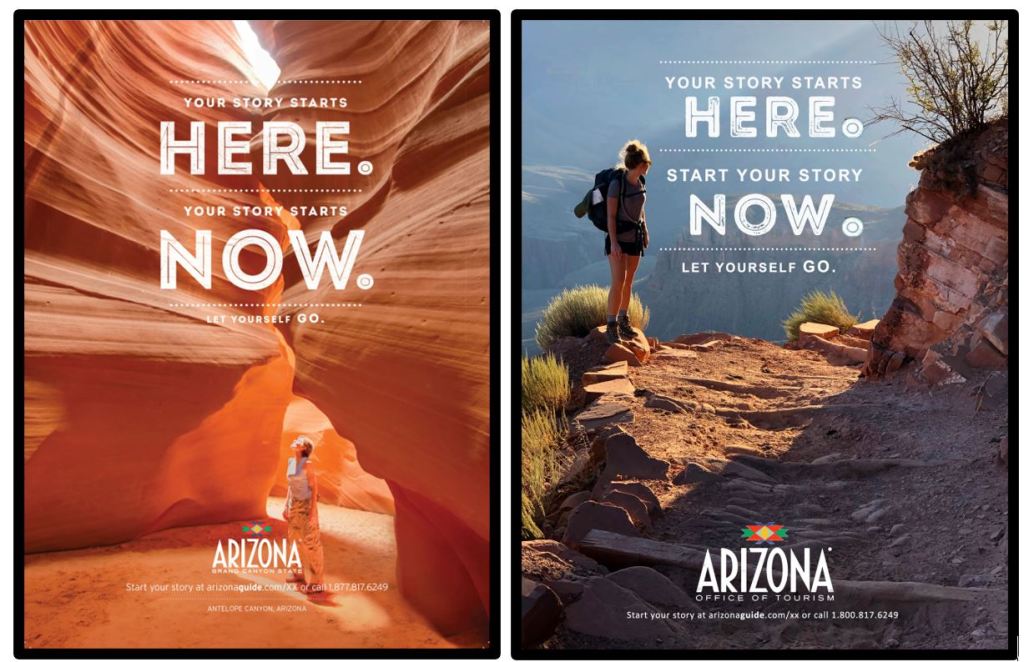
The ad campaign I chose to work on was a travel ad for an Arizona Tourism Guide. The above ad was found in an article highlighting the new ad campaign by Arizona Tourism. It depicts a woman looking up through Antelope Canyon. The design shows nature clean and untouched. The ad is promoting a tourism guide in Arizona to start a personal travel story. The ad series all has “Your Story Starts Here” and then variations depending on the destination picture.

Original Ad – Reverse Engineered

Typography – The ad uses San Serif throughout but in contrasting variations. The large bold words are a negative letter space outlined in thick white. The text throughout is in white giving it a pop from the monochromatic scenery. The chosen text color also matches the woman’s top tying it into the picture itself.

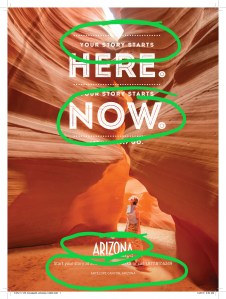
Colors – The ad is a variation of a black and white photo. It uses vermilion and white as the main colors. Monochromatic canyon allows the white only text to stand out and draw your attention. Antelope Canyons vermilion color is splendid in its contrast shadowing from the natural lighting. It allows the depth and texture to show through with the light vs. dark. The line pattern of layers implies the age and complexity of the canyon.
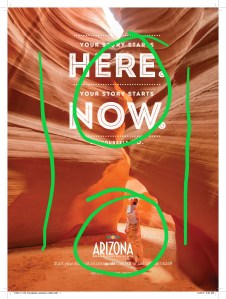
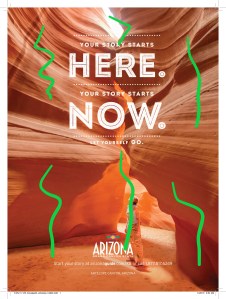
Design – Alignment of the text is all centered. This allows for space around to give more depth to the canyon. The woman is crowded with the lowest text but it seems to ground her to the canyon floor. Alignment of the woman is on the bottom third close to the center, following the rule of thirds. Her proximity to the canyon appears vast yet close. She is looking upward toward the light above. Seemingly reflective in thought of what story she is creating. The light emanating from above gives contrast to the textured canyon. The lack of many colors makes the actual tones attract you to the light and dark. The colors are repetitive and allow the text to stand out more in its repetition of small to large sizing.
Created Ad – Reverse Engineered

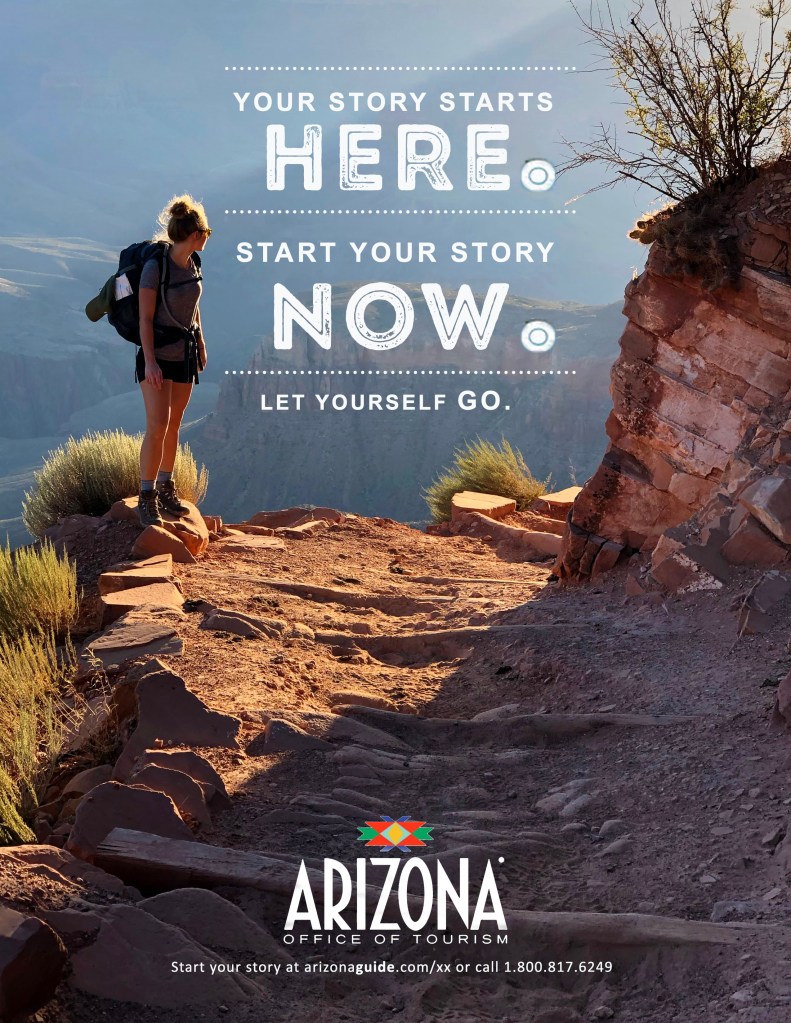
Typography – The new ad continues the use of San Serif throughout. By the drastic difference of size of typography it lends to the overall contrast of the design. I kept the alignment centered, but did change the dotted lines more in framing the text. All text of like kind in the top are aligned with each other keeping the uniformity.
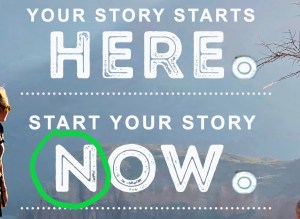
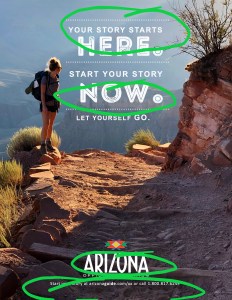
Colors – The new created ad has many colors in nature. The left upper side shows the muted tones of nature in light. While the lower right side shows the same in shadow. Unlike the original the multi colored photo shows the depth of the path the hiker is on. The light and dark shadowing does allow your eye to travel the path and feel the textures.
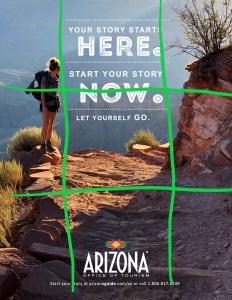
Design – Alignment of the text is all centered but also the different sizes ar aligned together. This allows the viewer to see the trail and hiker. Again the hiker is crowded to the text but instead to the top text. This lends to the height in which the hiker is at. The hiker is aligned in the left third following the rule of thirds. The hiker is also looking back out away from the photographer giving the impression of reflection of natures beauty and the story she is creating. The light coming around the bend gives a space of light on the path.

Conclusion – Your Story Starts Now

The original and new ad work together well promoting tourism to Arizona. They are similar in style and tone. They are different in location and in draw to the visitor. Both are breathtaking in subject without being the same. In looking at the campaign intention the two are similar in their call to explore Arizona. The information provided in the tourism guide gives the viewer the opportunities to explore. While one ad is mild in action (woman in canyon) the other requires more action (hiker with camp pack). The ads are appealing to two different demographics yet collectively to the same.
Photography & Typography

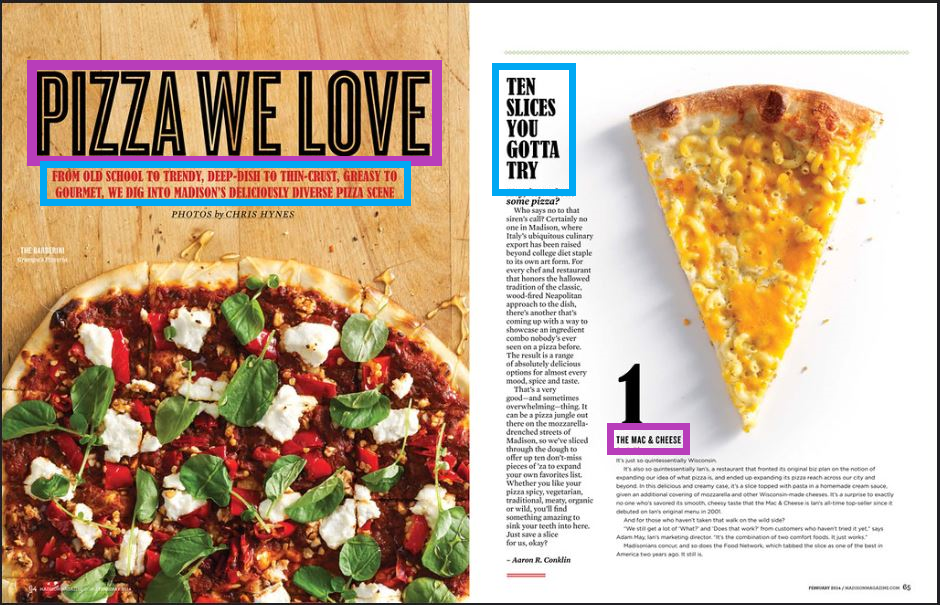
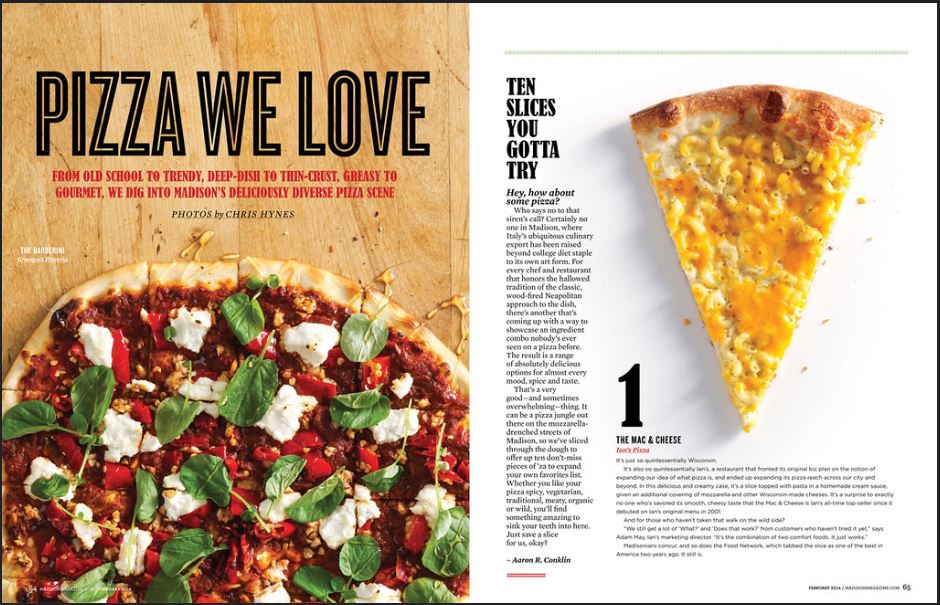
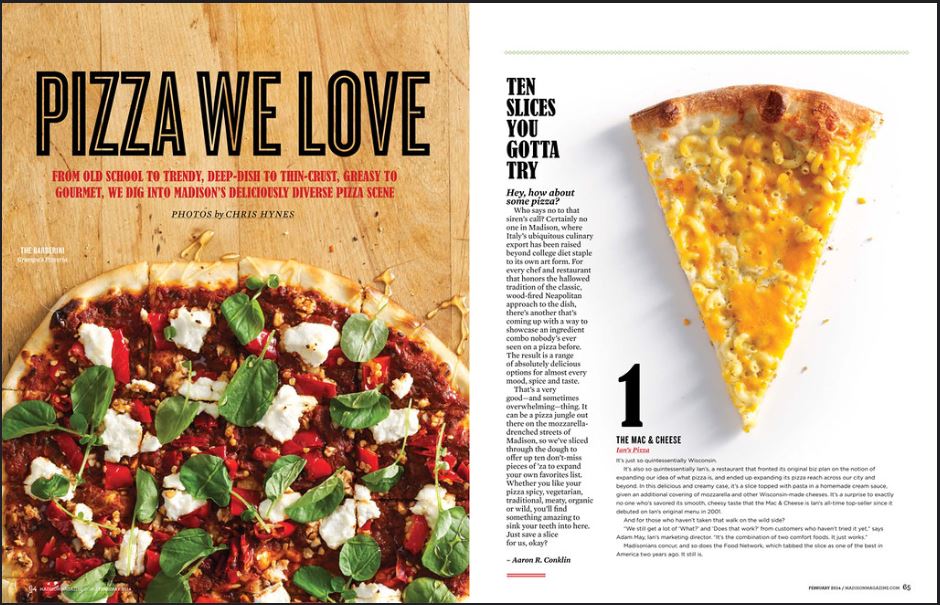
The magazine spread I chose was “Pizza We Love”. I chose this for the pizza, I got to make or get a pizza to take a picture. Oh, darn I wouldn’t be able to let the pizza go to waste. No really, the pizza photos looked appetizing. They used ten unique types of pizza in the article. In looking at the principles that I have been learning this week I saw several being used in the magazine spread. The rule of thirds, depth, and two types of typefaces are the ones I chose to write about. The “Pizza We Love” written by Aaron R. Conklin and photos by Chris Hynes for Madison Magazine are bursting off the page with flavor.

http://chrishynesphoto.blogspot.com/2014/01/ten-slices-to-try-pizza-story-for.html

Figure 1

Typography Identification

The magazine spread does a good job of using several typography techniques to bring attention for viewing (Figure 1). The left side purple boxed typeface for “Pizza We Love” is decorative. It has the added element of negative space in the middle, making it more of an outlined letter. The blue box on the left shows good examples of Modern type with its serifs and thick/thin lines. On the right purple box is a sans serif type with its thick lines. The blue boxed type on the right is oldstyle for its thick to thin weight and the serifs.

Figure 2

Typeface Contrast

On the figure 2 image, on the right he two type faces are contrasting in the blue box because of the difference in weight. The contrast of the green and purple areas on the right is the type size. They also use different typefaces oldstyle and san serif that contrast each other.  On the left blue box, they use three different colors contrasting the type to help the information pop. The color changes do not take away from the pizza.

Figure 3
Figure 4

Photography

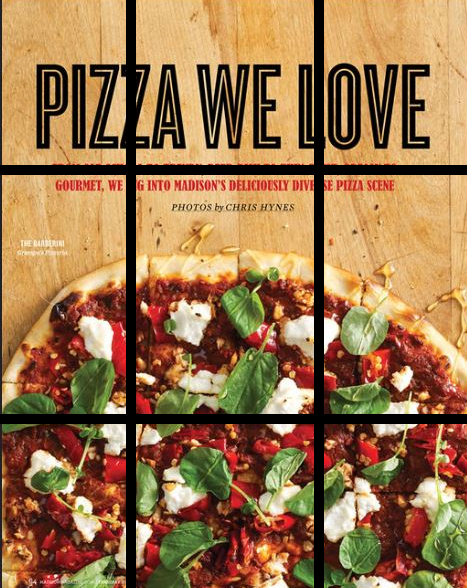
The photographer used the rule of thirds for the left side of the spread (Figure 3). By doing this the pizza does not overpower the page. Allowing the text to be equally prominent to the pizza show how the rule of thirds can give eye pleasing contrast. The next picture (Figure 4) shows good depth by adding crumbs to the background of the pizza slice. The shadowing on the left of the slice gives proportion for a 3-D effect. The left page purple outline shows several elements that lend to the dimension of the photo. First you see shadow and crumbs like mentioned in the right page. The peaks and valley of the pizza toppings factors into the depth of the photo. It allows the eye to see the different toppings individually and together.

Figure 5
Figure 6
Figure 7

Alternate Photos

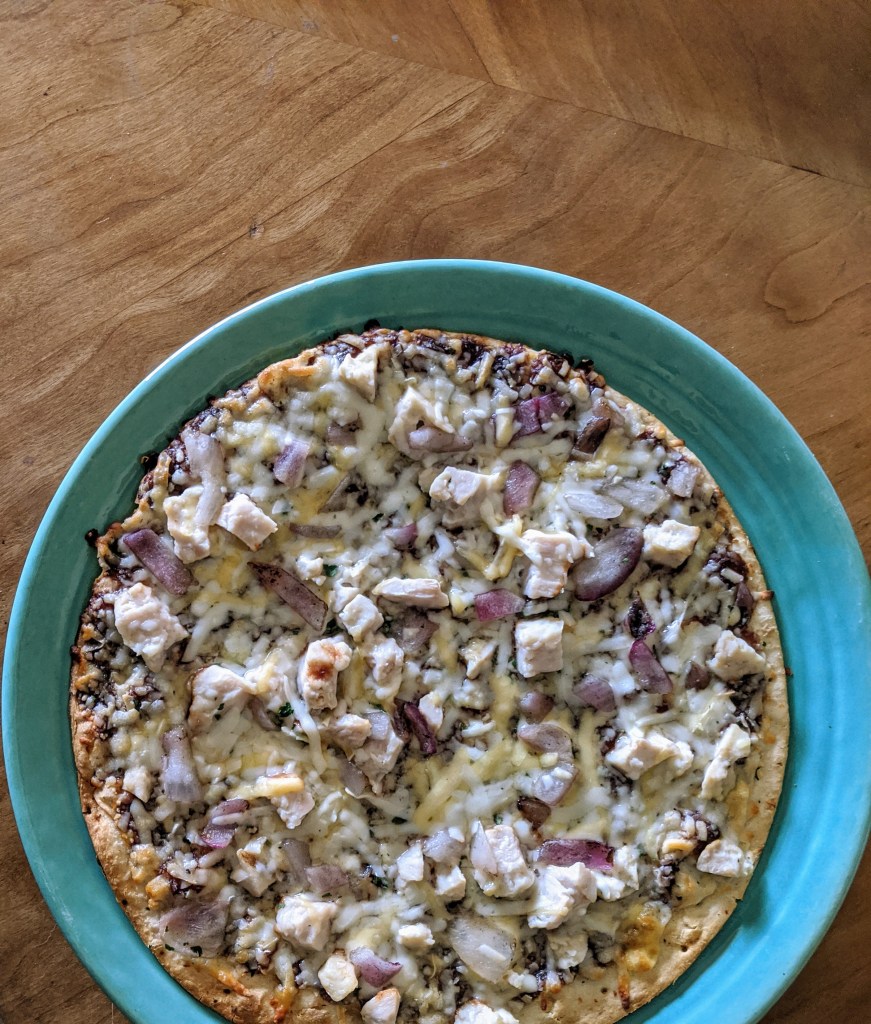
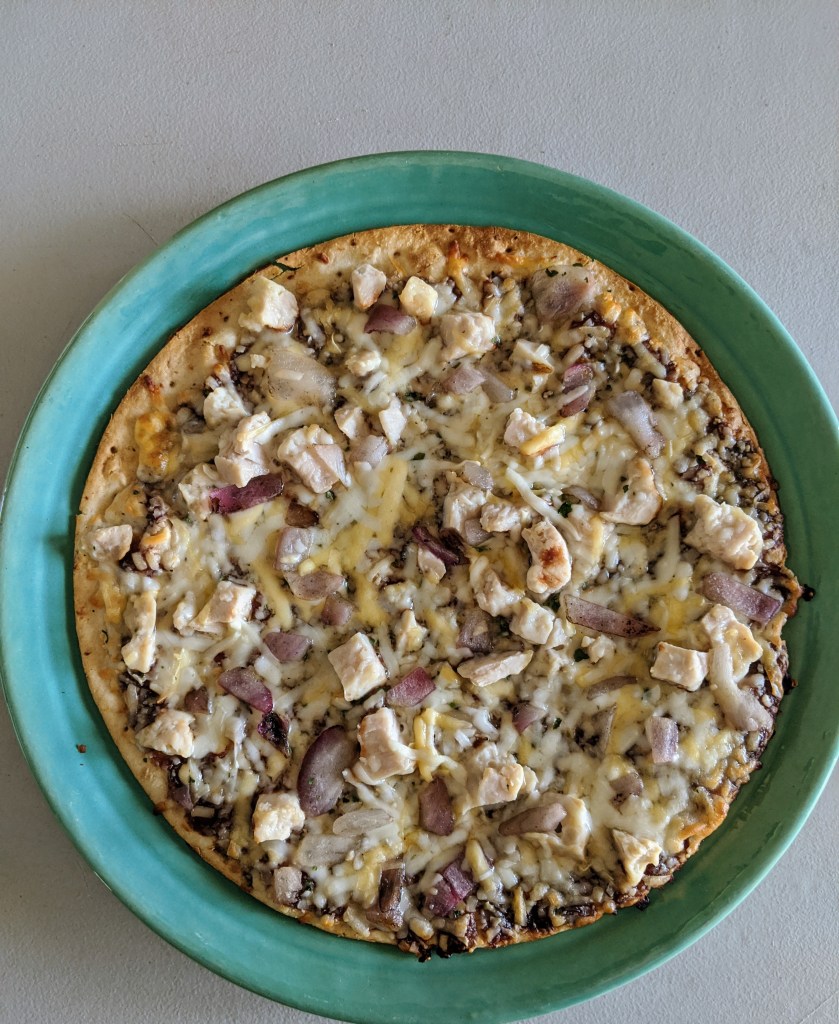
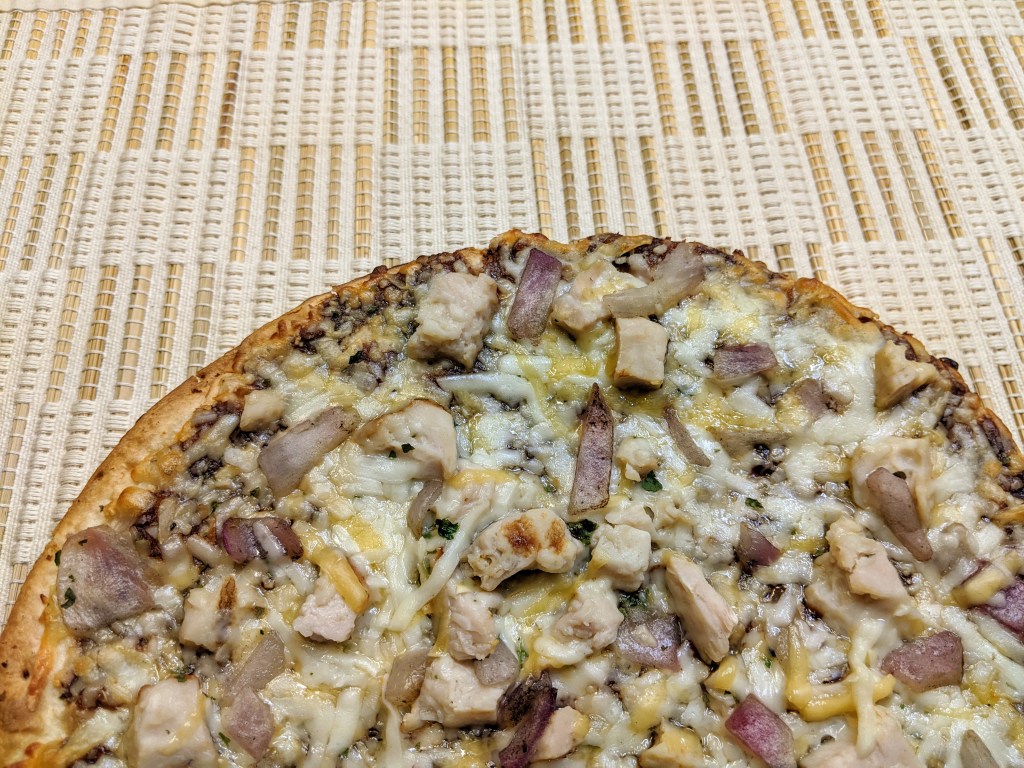
The photos I took mimicked the original photo. I used different elements to give a different feel or texture to the subject. In the wood background photo (Figure 5), the pizza I made was bland in color. I used a plate with color to give more depth. While I liked this slight twist on the photo, I can see this as most eye pleasing for the color warmth. Next, I took a picture with a bland background (Figure 6) to only bring attention to the pizza and plate. Lastly, I placed the pizza on a place mat (Figure 7) that had a neutral coloring to see if it brought out more color in the subject. This was the one I liked best for its simplicity and the design of the background it has leading lines and helps to give pop to the pizza color.In trying all the backgrounds and different lighting, I did take many pictures with different elements to see what would happen.

Conclusion

The above principles all contribute to the design of the spread together complementing each other. The rule of thirds keeps the photo from being overpowering. The depth gives dimension and feel for the food. The backgrounds between the two pages are opposites of light and warm to give design contrast. The typefaces used draw the eye to the content and interest by their visual effects. Alone these would not give a whole feel for interest of the reader. Put together they make a statement of “check this out”. My favorite was the decorative type that leads you to the photo of the pizza below it. I felt just enough fun for a pizza night and comfort to be interested in the subject matter.

Figure 8

This pizza spread lends to the hunger and desires of the American pizza lovers’ appetite for new combinations. Pizza has become an American pastime that is a staple in diets of pizza enthusiasts. PhotographerChris’s blog gives the following information, “January- it’s cold, it’s dark, it’s time for the perfect comfort food- pizza!  Check out some tempting new flavors from of our favorite Madison pizzerias:  Grampa’s Pizzeria, Ian’s Pizza, Paisan’s, Pizza Brutta, Cafe Porta Alba, Glass Nickel Pizza Co., Lombardinos, Naples 15, Luigi’s Pizza, and Roman Candle Pizzeria.”

Design & Color

Ad for Trivago – Germany
“Stop traveling with your head”

  • Link: https://www.adsoftheworld.com/media/print/trivago_stop_traveling_with_your_head
  • School: Miami Ad School
  • Published/Aired: September 2019
  • Posted: January 11, 2020
  • Description: Print advertisement created by Miami Ad School, Germany for Trivago, within the categories: Hospitality, Tourism, Professional Services.
  • Credits: Advertising School: Miami Ad School, Hamburg, Germany.
  • Art Director: Leon Kaiser

Introduction

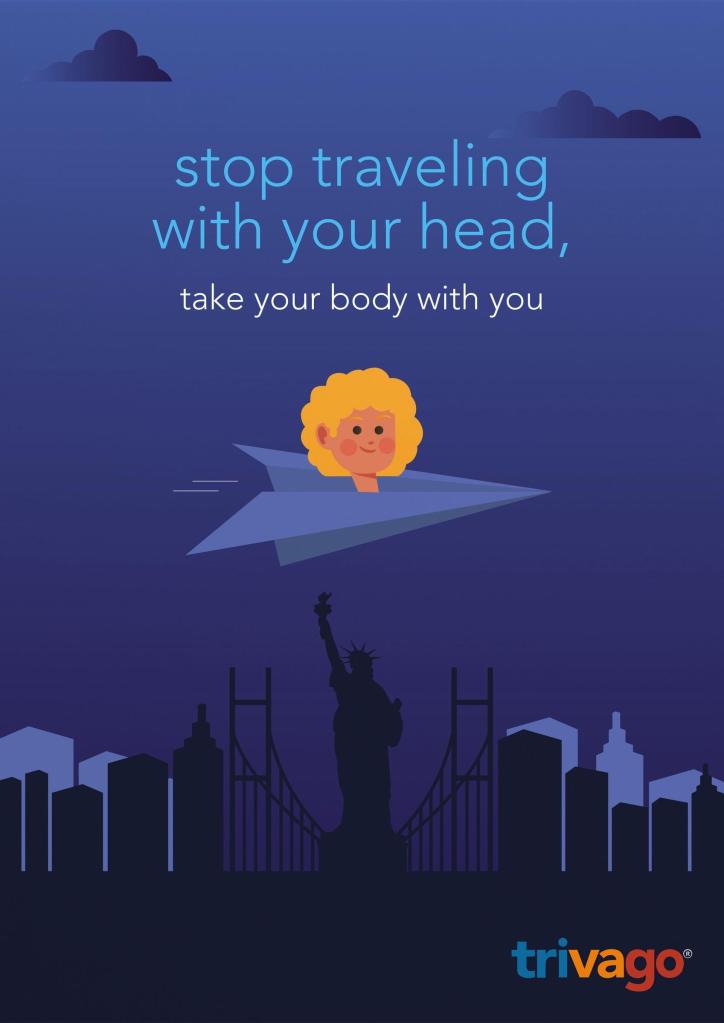
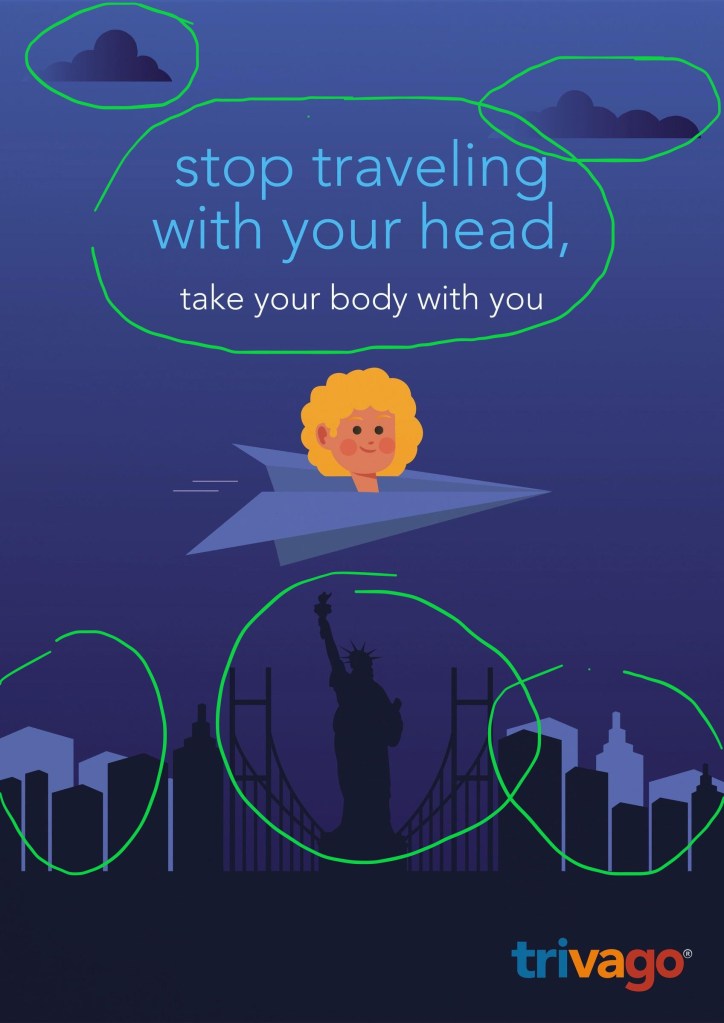
This project is to use show the use of five elements of design: contrast, repetition, alignment, proximity, and color in an ad. I chose the blue version of the Trivago ad campaign called, “Stop traveling with your head.”

Contrast Analysis

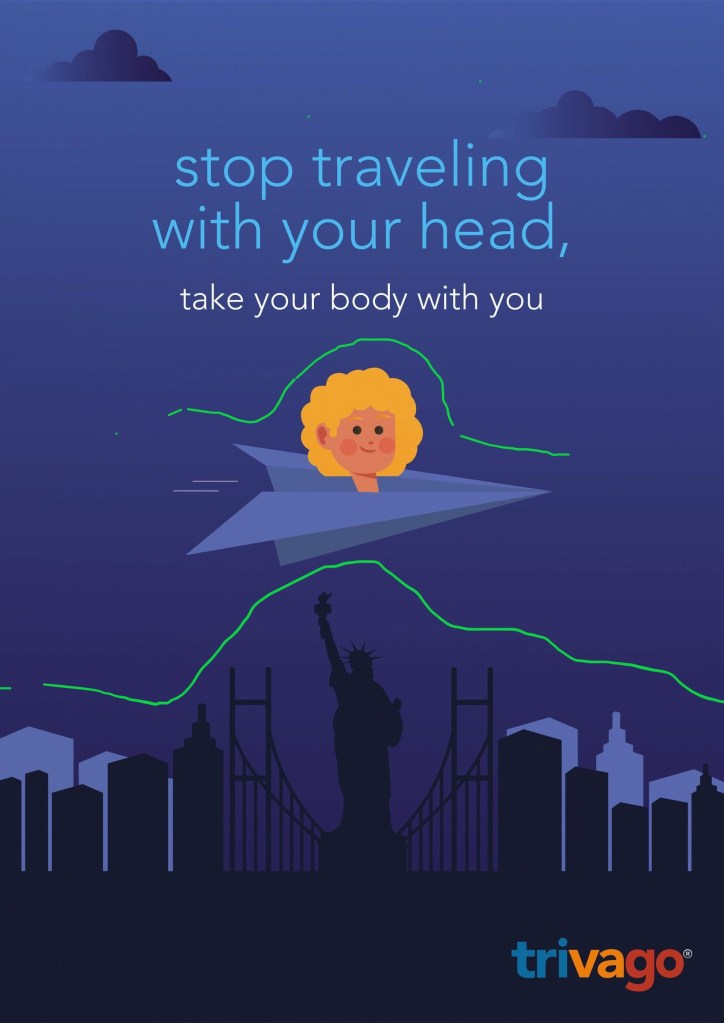
One form of contrast I found in this ad is in the representation of travel to a city via air through the clouds. The ad show contrast in the light and dark building outlines giving it depth. The text used shows contrast to the color scheme used in the artwork as well as contrast in the colors chosen. The clouds used are gradient also giving contrast to the color scheme.

Repetition Analysis

The ad shows repetition in the clouds at the top of the ad. The other element of repetition used is in the buildings with the bridge halves that flank the outline of the Statue of Liberty. The logo for Trivago in the ad is recognizable because of the consistency in its use through all media ad forms. The color scheme used in the logo helps viewers realize the pronunciation, further branding the company.

Alignment Analysis

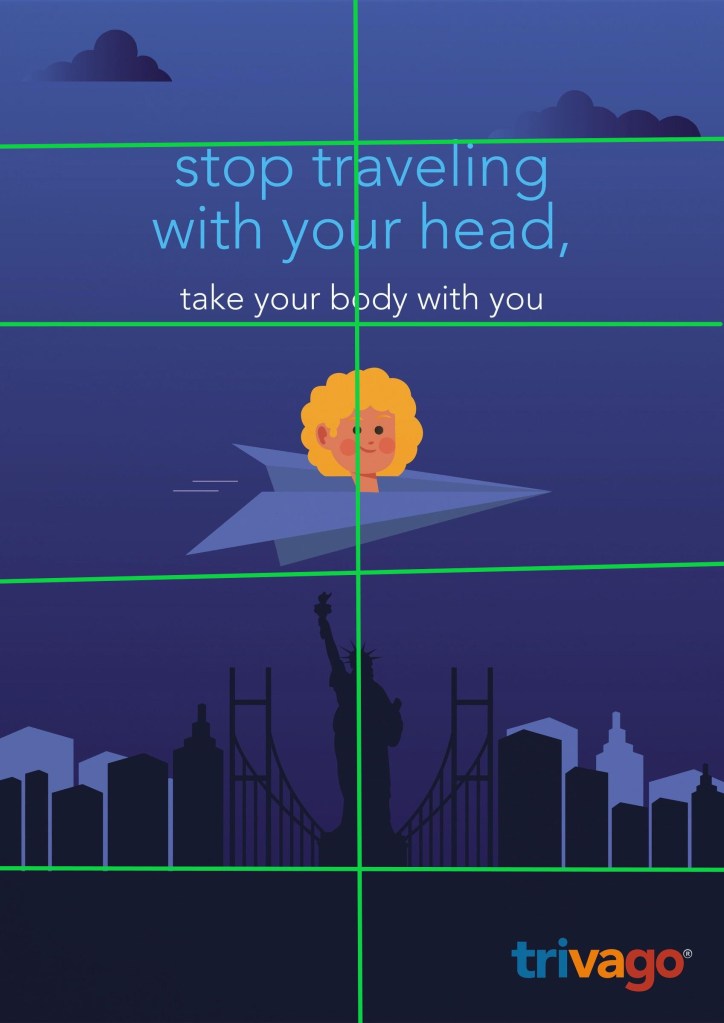
The ad is broken vertically in half, mirroring each other. The alignment of the text is centered above the main focus of the head in a plane. This allows the catch phrase to work in complementing the art used. The logo in the bottom is right aligned and allows attention to be drawn but not overwhelming the point o the ad. The ad is broken into five horizontal sections, each one not over powering the other. The top three give travel a visual while the bottom two give a feel of being grounded to the destination.

Proximity Analysis

The proximity of the text to the head traveling ties the slogan to the art represented. With the head on a plane being first it leads to the destination of the city outline. The space between are close in proximity allowing the slogan to be well represented. The logo at the bottom right give the feeling of established in the foundation of the ad without overwhelming the art itself.

Color Analysis

This ad primarily shows color using blue in different hues. Going from a dark navy to a light blue. The head on the plane also ties into the logo color scheme by the yellow used. The clouds are using a gradient blue giving depth and contrast to the top of the ad. Using the blue hues gives a sense of uniformity throughout the ad.

Conclusion

This Trivago ad gives all of the elements of design we have been learning about. It is effective in not overwhelming the viewer because of the balance used. The monochrome blue gives the positive effect for the eye to catch the subtle contrasts. This allows the viewer to be effectively engaged to the ad. This is a good example of correct principles of design being used to an effective ad.

Design a site like this with WordPress.com
Get started